What does love look like in everyday life in Brazil– and what gets lost in translation?
This month, we’ve been deep in the qualitative coding process for our Brazil interviews, and the data is already giving us culturally rich insights.
As we work through hundreds of conversations about everyday experiences of love, certain themes that we haven’t seen in our research outside of Brazil continue to appear. In fact, some of these experiences are so unique to the cultural context of Brazil that there are no direct translations in English. Two that have stood out in particular are saudade and cafuné.
Saudade is associated with feelings of longing, nostalgia, and missing—but those words don’t quite capture it. It's nuanced and bittersweet; described by our Portuguese-speaking RA, Lara, as “more than just missing someone’s presence” and “feeling happy and grateful for the memories.” Many participants have brought up anecdotes in which the experience of saudade made them feel loved. For example, one participant vulnerability discussed the love they felt when reflecting on memories shared with their late father:
“We remember everything we've lived, what we've missed out on, the plans we had to travel, everything. And there, in that long moment of silence, and I can't tell you how long, I realized how much I loved that person. I'm very similar to him. … How much that person who was leaving, the matter, right, how much that moment made me remember so many moments…”

"Red Ribbon" by Michael Maczuga
While Saudade describes a highly abstract emotion, Cafuné, by contrast, is much more physical. Cafuné refers to the simple act of running your fingers through someone’s hair. Our participants frequently illustrate it as a gesture of care and affection.
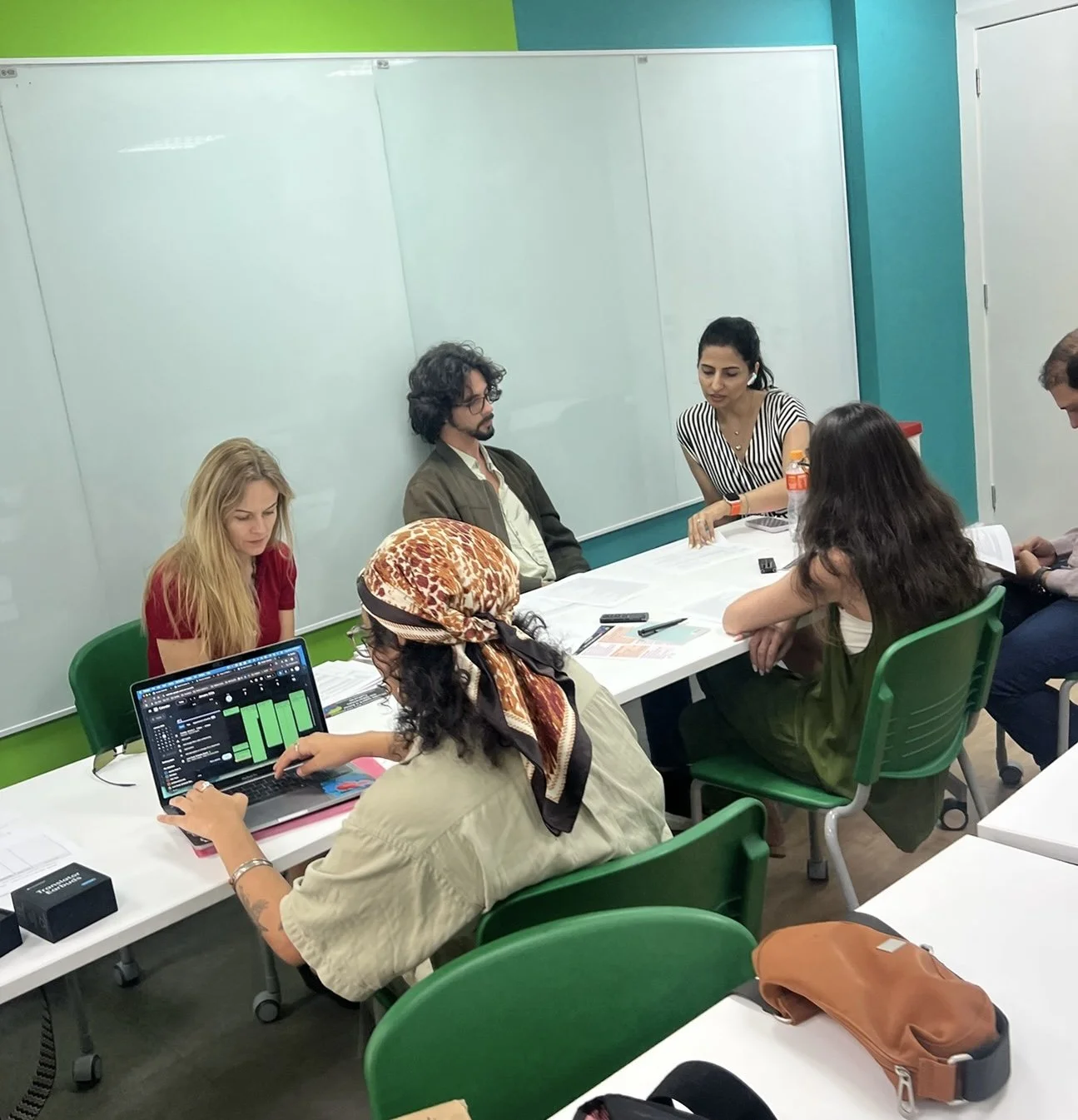
This process has highlighted the importance of conducting fieldwork with local partners, and ensuring that their perspective is represented when analyzing the data. If it wasn’t for the insight shared by our collaborators in Brazil and Portuguese-speaking graduate students, we could have overlooked the unique depth in words like Saudade and Cafuné. Measuring something like love requires more than translation and straight-forward coding; it requires cultural attunement at every step.
These insights are now directly shaping the development of our FLQ–Brazil questionnaire. As we prepare for our quantitative data collection, we’re incorporating these culturally specific scenarios to make sure we’re accurately capturing how love is experienced and recognized within Brazilian culture.
Alongside this work, we’ve also had exciting updates across the lab. The HEART Lab’s PhD student, Jaymes, recently presented on our Cultural Consensus Study in Spain at the Third International Conference on Love Studies. You can learn more about the CCT approach and our analysis and results from the Spain study in the Youtube link below.
We are excited to discover more fascinating expressions and concepts associated with love as we continue to unpack more interviews from our Brazil data. Stay tuned for more!
